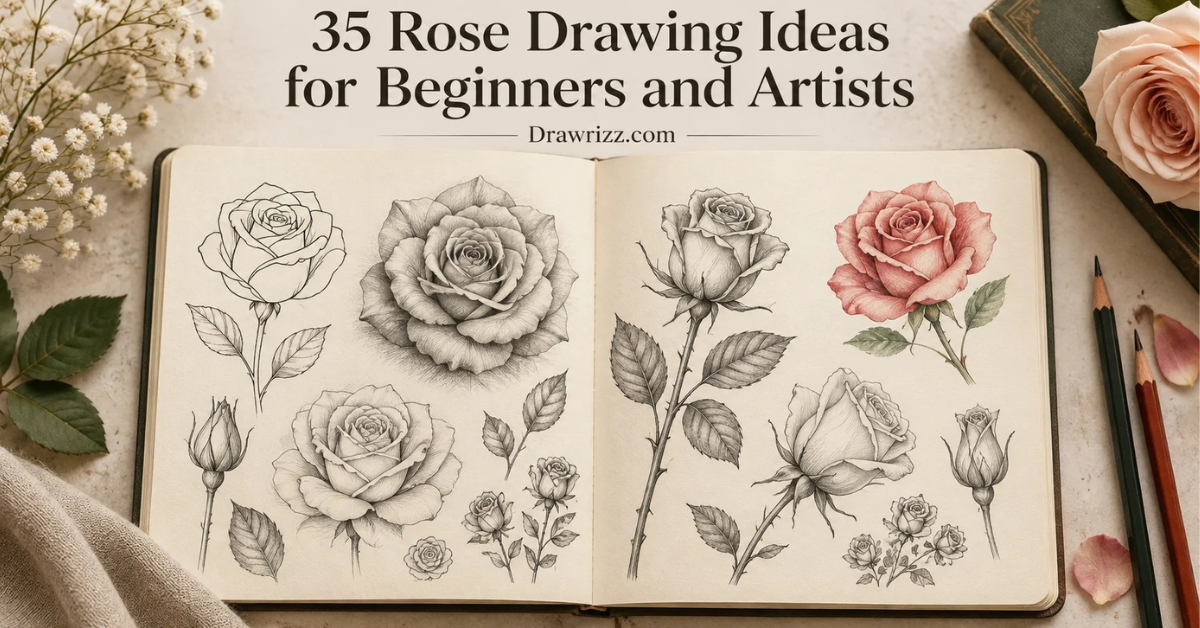
Rose Drawing Ideas can be as simple as a clean flower outline or as detailed as a shaded botanical sketch. Roses are especially fun to explore because changing the petals, angle, stem, leaves, color, or drawing style can create a completely different piece of artwork.
Whether you’re filling a sketchbook, practicing pencil shading, looking for something easy for kids, or experimenting with more realistic floral art, the ideas below give you plenty of directions to try. Start with the styles that feel comfortable, then gradually experiment with more petals, texture, perspective, and color.
Easy Rose Drawing Ideas to Start With
If detailed flowers feel intimidating, begin with simplified shapes. A rose does not need dozens of perfectly arranged petals to be recognizable. A curved center, several overlapping petal shapes, and a stem can already create a convincing flower.
1. Simple Rose Outline
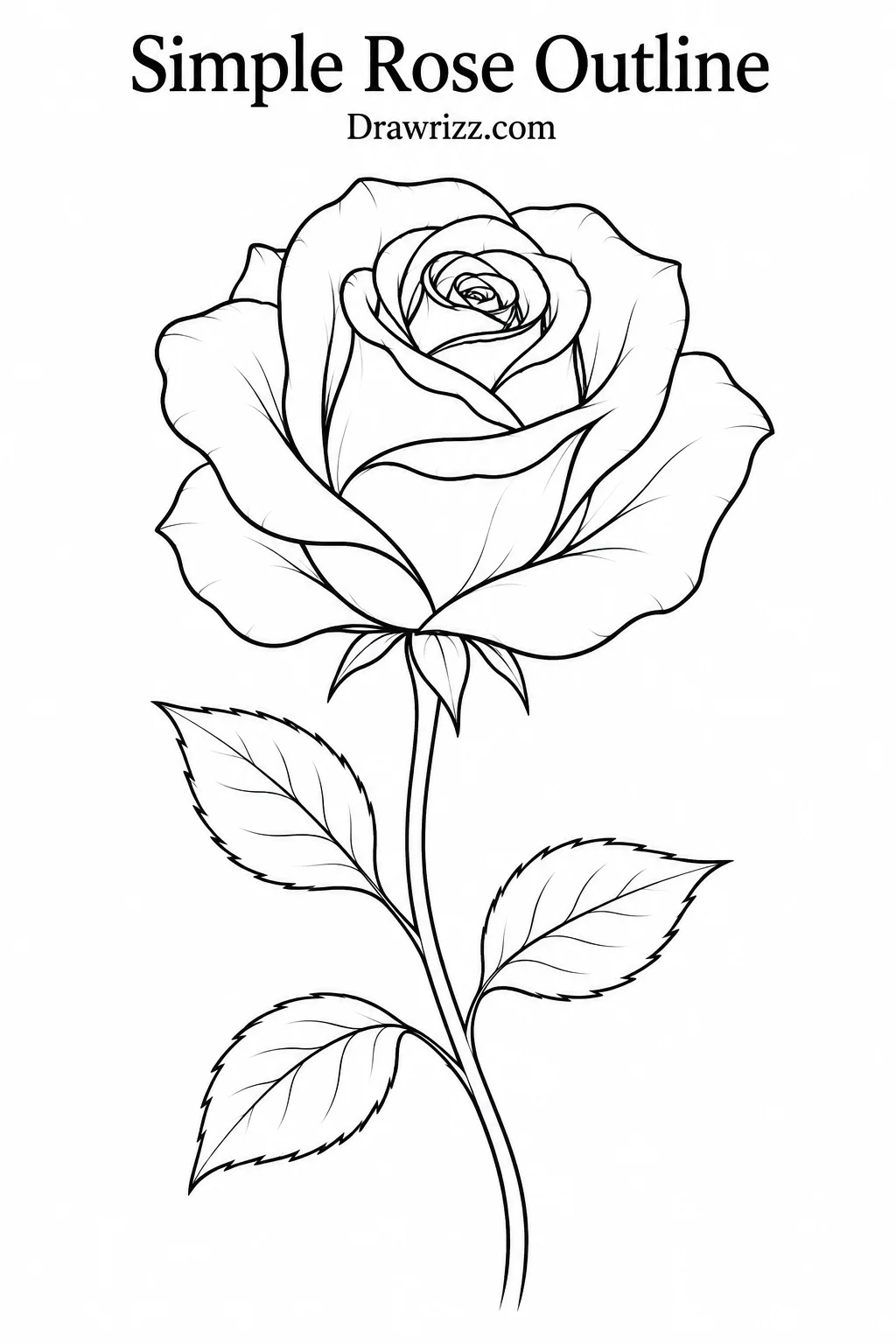
Draw a large bloom using smooth curved outlines and only enough inner lines to separate the major petals. Add a long stem and two or three leaves. Keeping the interior mostly white makes this an excellent first sketch.
2. Spiral Rose
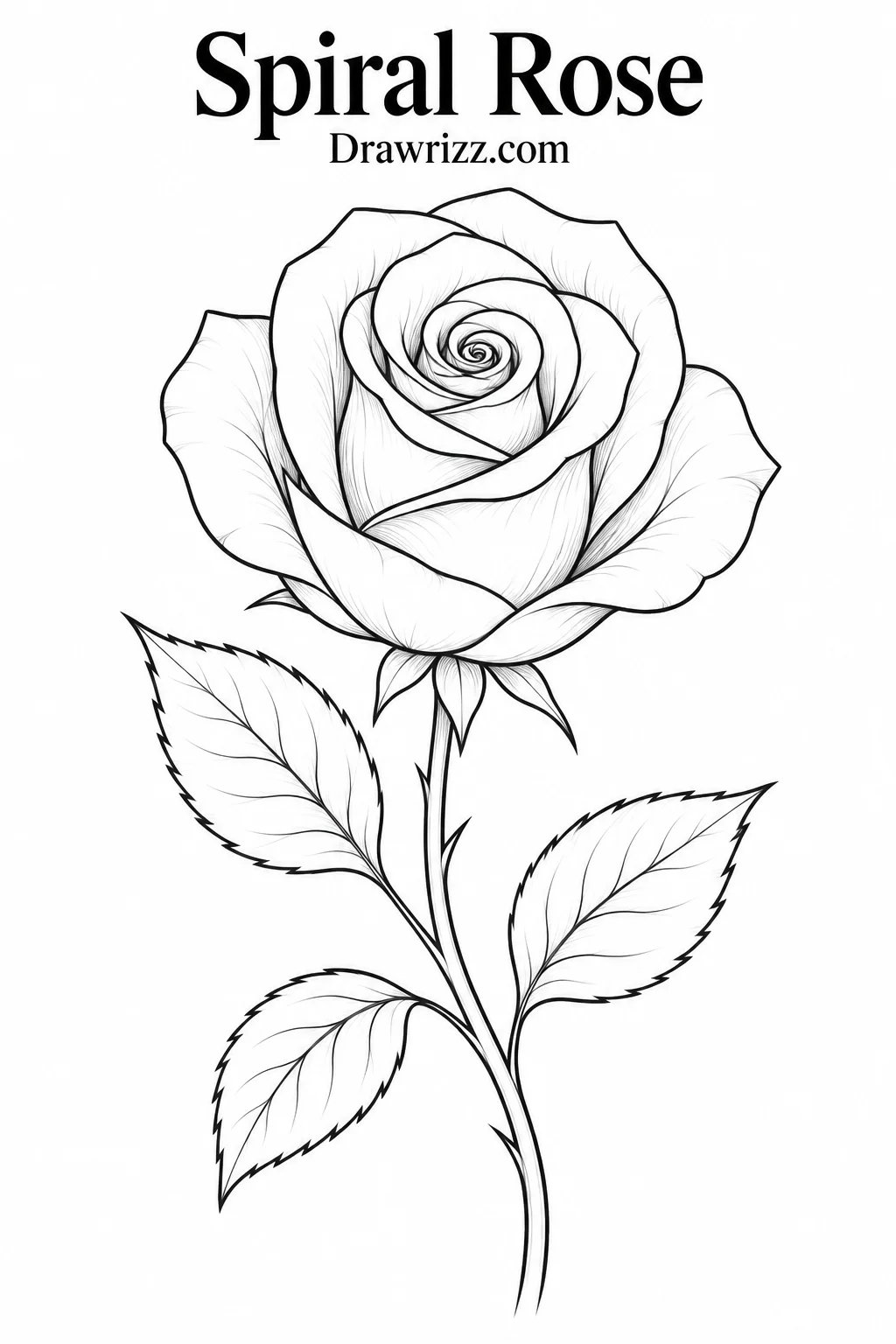
A loose spiral can become the center of your bloom. Surround it with irregular curved petals that gradually become larger toward the outside. Don’t make every curve identical; slight differences make the flower more natural.
3. Cute Mini Rose
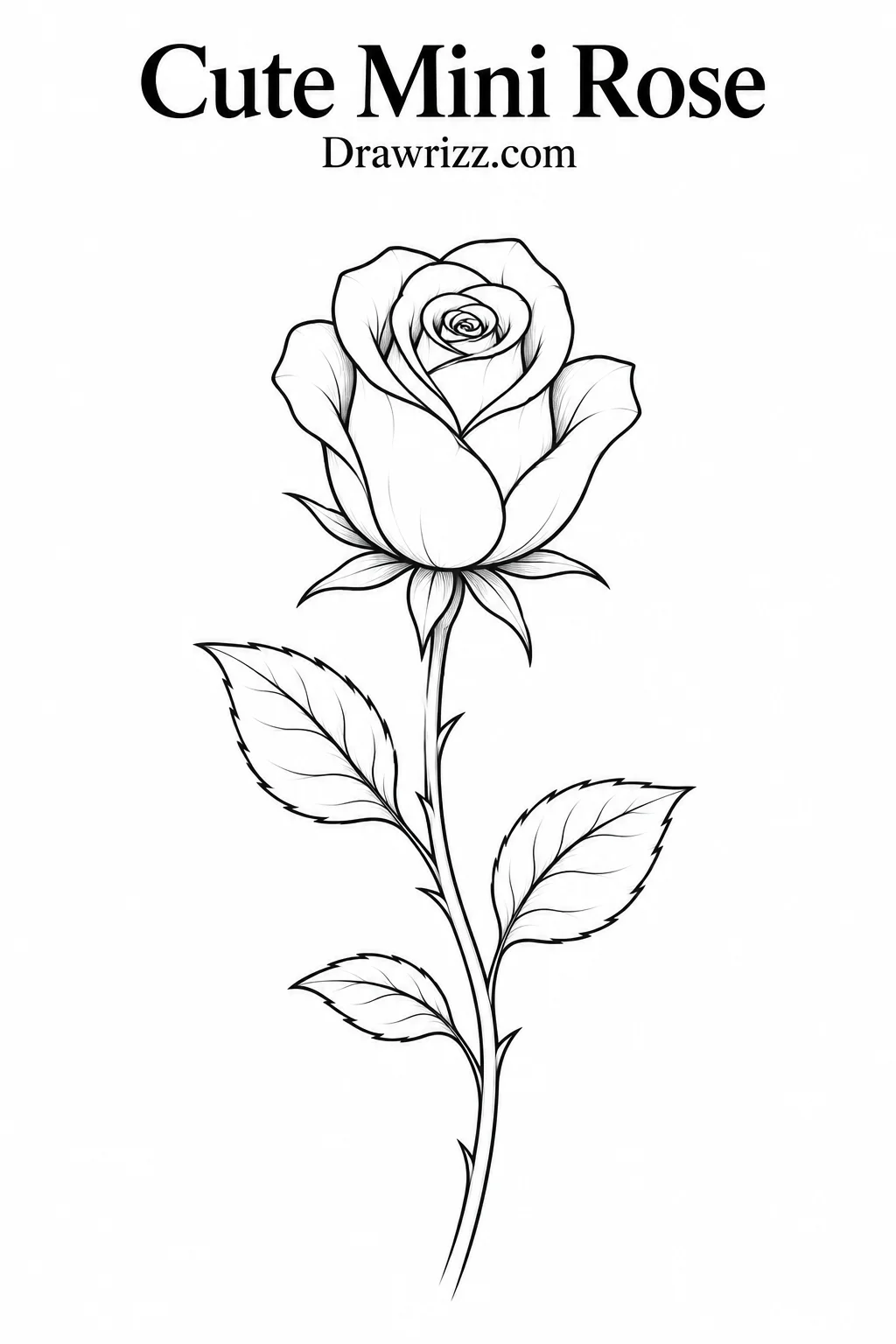
Keep the bloom small and rounded, then add a short stem and tiny leaves. This style works particularly well in journals, planners, greeting cards, and doodle pages.
4. Easy Rosebud
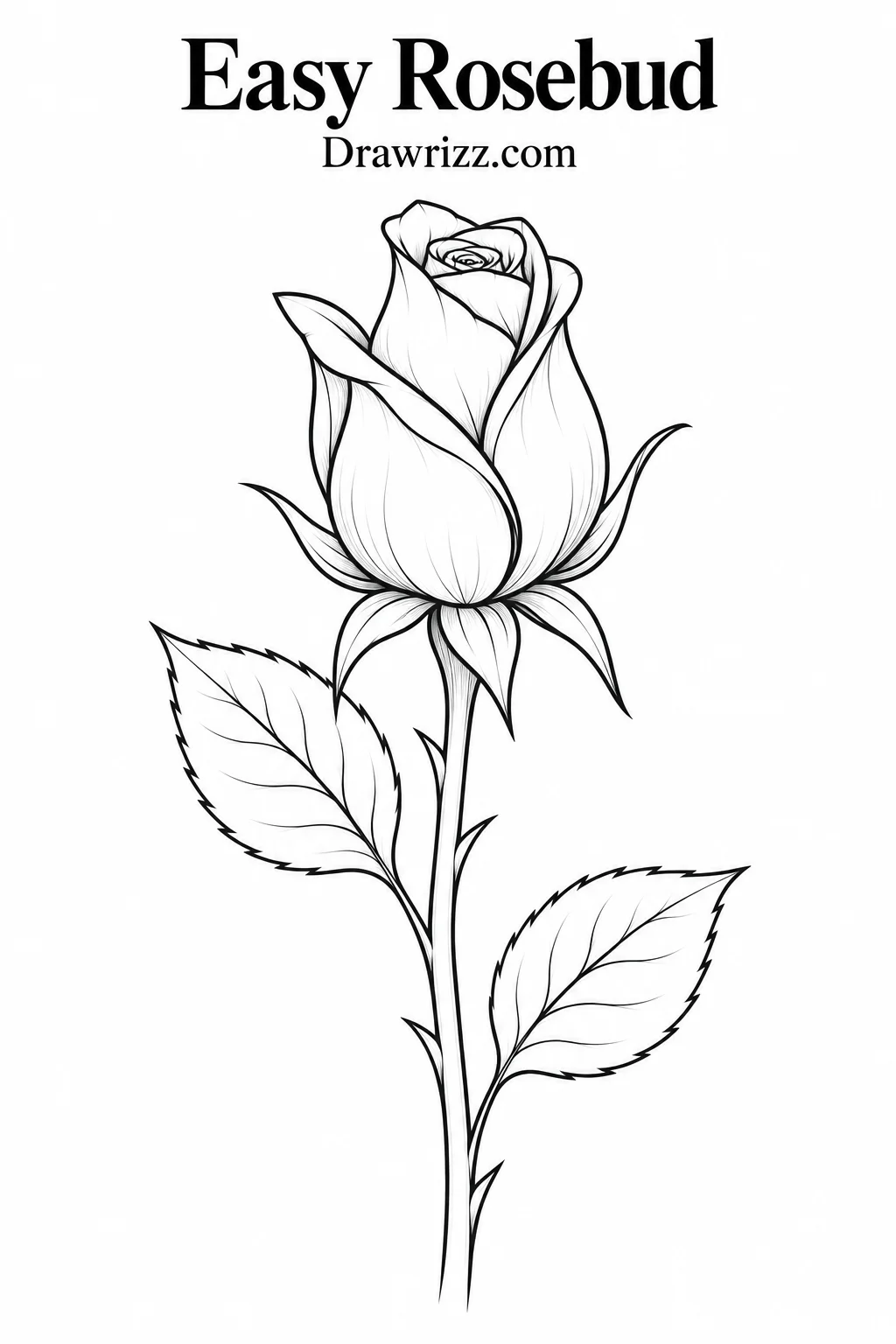
Instead of drawing a fully opened flower, sketch a narrow bud with overlapping folded petals. Add pointed sepals underneath and a simple stem for an instantly recognizable shape.
5. Rose With a Simple Stem
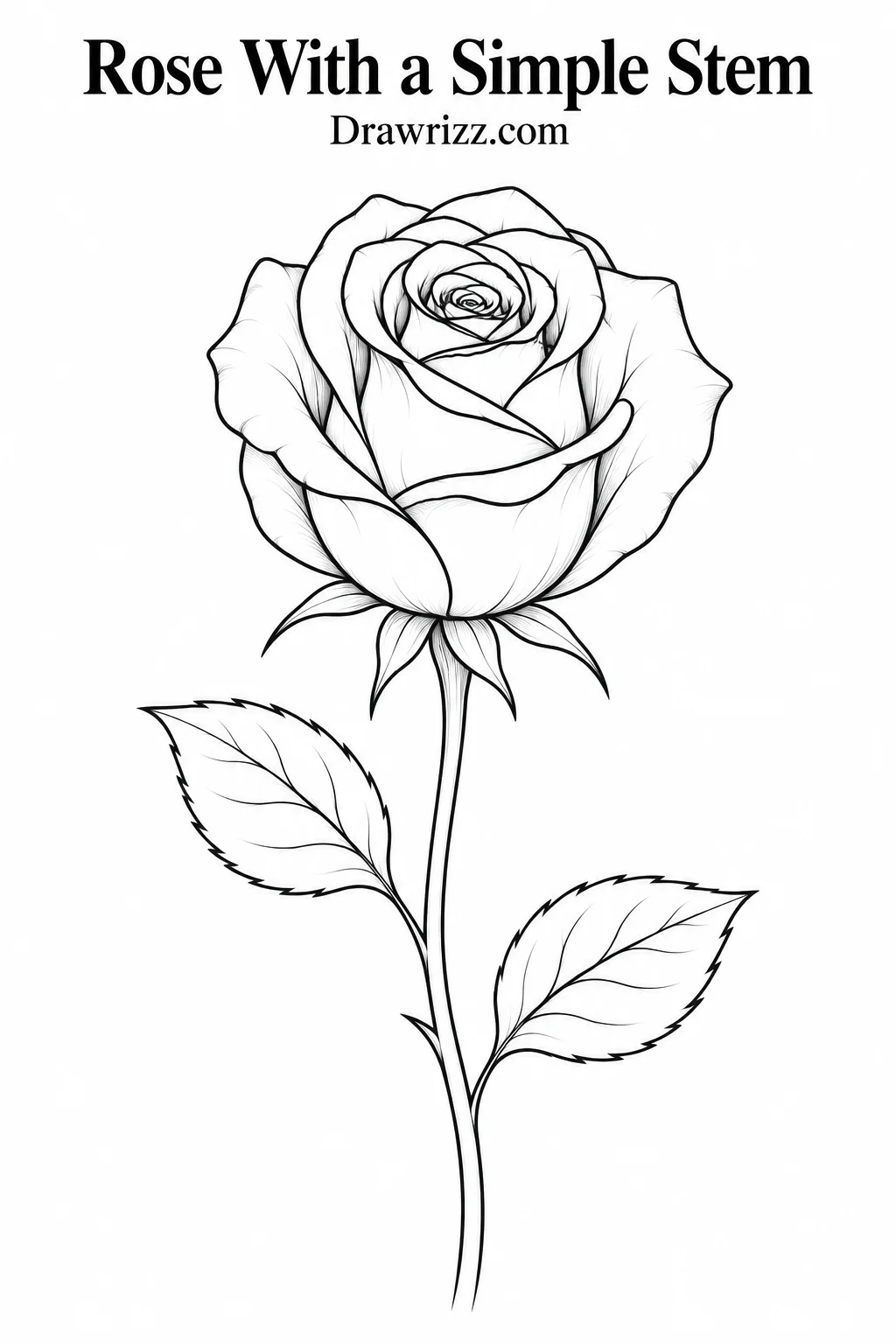
Pair a moderately detailed bloom with one long stem. Add only a couple of leaves so the flower remains the focal point. This is close to the classic rose silhouette most people immediately recognize.
Creative Rose Sketch Ideas
Once basic flower shapes feel comfortable, experiment with composition. Instead of focusing only on making petals more complicated, change what surrounds the bloom.
6. Rose and Butterfly
Place a small butterfly beside or slightly above the flower. The delicate wings provide contrast against the layered petals and can turn a simple botanical study into a charming nature scene.
7. Rose Inside a Heart
Use a simple heart outline as a frame and let a bloom overlap one edge. This combination works nicely for romantic illustrations, cards, and decorative sketchbook pages.
8. Rose and Crescent Moon
Combine botanical and celestial elements by placing a flower along the lower curve of a crescent moon. Add a few tiny stars without overcrowding the composition.
9. Rose in a Glass Bottle
Sketch a narrow transparent bottle holding a single flower. Lightly suggest the water line and the stem visible through the glass for an interesting still-life effect.
10. Rose With Falling Petals
Draw one open bloom and place several detached petals drifting downward. Vary their angles and sizes to create movement rather than arranging them in a straight line.
Aesthetic Rose Drawing Ideas
Aesthetic artwork often depends more on composition and restraint than extreme realism. Soft pencil marks, delicate lines, unfinished edges, small surrounding elements, and thoughtful negative space can make a page visually interesting.
11. Minimalist Rose
Reduce the flower to its essential contours. Use thin flowing lines for the petals and stem, leaving most of the paper untouched.
12. Rose With Tiny Stars
Surround a delicate bloom with a handful of tiny hand-drawn stars and dots. Keep them sparse so they support rather than overpower the flower.
13. Rose With a Ribbon
Wrap a flowing ribbon around the stem or beneath the bloom. Leave the ribbon blank or add simple decorative marks instead of text.
14. Rose in an Ornamental Frame
Place the flower inside an oval or softly arched vintage-inspired frame. Allow a leaf or petal to extend slightly beyond the border for more depth.
15. Rose Sketchbook Page
Fill one page with several studies: a bud, open flower, side view, loose petal, leaf, and small stem study. Different scales make the composition feel like an artist’s practice sheet.
Rose Drawing Ideas With Pencil
Pencil is ideal when you want to explore light, shadow, texture, and depth. An HB pencil can establish light contours, while softer pencils can deepen shadows beneath overlapping petals.
Instead of immediately darkening every line, establish the overall shape first. Once the basic structure looks right, gradually develop the petals and values.
16. Soft Graphite Rose
Keep the outlines delicate and build depth through gentle shading. Darken the areas where petals overlap while leaving their exposed edges lighter.
17. Dark Shaded Rose
Push the contrast further by making the deepest folds noticeably dark. Leave selected petal edges almost white to create a dramatic three-dimensional effect.
18. Rose Petal Study
Instead of drawing an entire flower, arrange several individual petals across the page. Study curled edges, folds, veins, shadows, and the subtle differences between inner and outer petals.
19. Rose Leaf Study
Focus on foliage by sketching leaves at different angles. Practice serrated edges, central veins, and soft shadows while keeping a small flower nearby for context.
20. Rose With Dewdrops
Add several transparent droplets to large petals. Small highlights and curved shadows can make the drops appear to sit above the surface rather than looking like simple circles.
Realistic Rose Drawing Ideas
Realistic work becomes easier when you stop thinking of the bloom as a collection of identical petals. Inner petals tend to appear tighter, while outer petals open more widely and often curl or bend differently.
Observing overlaps is more useful than trying to create perfect symmetry. Look closely at how petals fold around one another and where natural shadows appear.
21. Realistic Open Rose
Choose a fully opened bloom and carefully map its overall silhouette before developing the center. Build outward, observing where one petal disappears behind another.
22. Side-View Rose
Drawing the bloom from the side changes how the petals overlap. Keep the lower petals broad and show the inner flower rising above them.
23. Half-Opened Rose
Capture the stage between bud and full bloom. Some petals should remain wrapped around the center while the outer layers begin opening outward.
24. Wilting Rose
Let the stem bend slightly and allow some petals to droop. A few fallen petals beneath the flower can reinforce the mood without making the scene overly complicated.
25. Rose With Detailed Thorns
Give more attention to the stem. Add naturally spaced thorns, textured leaves, and subtle stem shading beneath a carefully rendered bloom.
Rose Drawing Ideas With Color
Color can completely change the mood of the same line drawing. Instead of filling every petal with one flat shade, try a lighter center or edge and gradually deepen the color toward folds and overlaps.
26. Classic Red Rose
Use rich red for the petals and natural green for the stem and foliage. Preserve small highlights along selected edges so the bloom doesn’t appear flat.
27. Soft Pink Rose
Blend blush, dusty pink, and muted rose tones. Keep the shadows gentle for a softer romantic appearance.
28. Yellow Rose
Use golden yellow near the petal folds and pale cream toward the highlights. Pair it with fresh green leaves for a bright sketchbook study.
29. Blue Fantasy Rose
Naturalism isn’t required for every sketch. Try navy, cobalt, and pale blue layers to create a stylized fantasy bloom while keeping the structure believable.
30. Pastel Rainbow Rose
Give neighboring petals soft changes of pink, lavender, peach, yellow, and blue. Blend the transitions lightly so the final result remains elegant rather than overly bright.
Rose Drawing Ideas for Kids and Beginners
For younger artists and complete beginners, recognizable shapes matter more than botanical accuracy. Large petals, uncomplicated stems, and plenty of open space make drawings easier to control.
Starting with straightforward shapes also makes it easier to gradually add petals, leaves, stems, and small decorative details as confidence improves.
31. Big Petal Rose for Kids
Use a round center surrounded by large curved petals. Add a thick stem and two oversized leaves that are easy to outline and color.
32. Smiling Rose Doodle
Give a simple flower a tiny friendly face. Keep the facial features minimal so the petals remain the main visual element.
33. Rose in a Flowerpot
Place one or two simple blooms in a small pot. This introduces composition while remaining manageable for beginners.
34. Rose Bouquet
Group three to five blooms at slightly different heights. Combine open flowers with smaller buds and tie the stems together with a simple ribbon.
35. Rose Garden Scene
Finish with a larger composition containing blooms at different stages: buds, half-open flowers, and full roses. Add foliage and a few tiny background flowers, but leave enough negative space to keep the page readable.
Tips for Making Rose Sketches Look Better
Start lightly enough that you can adjust petal placement without leaving heavy marks. Think of the flower as overlapping layers rather than a perfectly symmetrical pattern. The inner petals can remain tighter while the outside shapes become broader and more irregular.
Pay particular attention to the places where one petal passes beneath another. Those overlaps naturally create darker areas and can provide depth even without highly realistic shading.
For colored artwork, the same principle applies. Deeper tones in folds and lighter areas along exposed edges can make the flower feel dimensional.
Most importantly, don’t make every bloom identical. A slightly tilted bud, uneven petal, curled edge, bent stem, or asymmetrical leaf can give botanical artwork much more personality.
Which Rose Style Should You Draw?
For a first attempt, try the simple outline, spiral flower, rosebud, or kids’ version. These options keep the shapes manageable while still creating a recognizable floral sketch.
If you already feel comfortable with basic flower drawing ideas, move toward a side-view bloom, bouquet, pencil-shaded flower, or sketchbook study. These styles provide more opportunities to practice composition, texture, and shading.
Artists looking for more detail can experiment with a realistic open bloom, dewdrops, strong graphite shading, petal studies, or a complete garden composition. Colored pencils also offer an easy way to reuse a successful sketch while creating completely different moods.
Final Thoughts on Rose Drawing Ideas
These Rose Drawing Ideas show how one flower can inspire everything from a tiny doodle to a detailed graphite study. You can keep your artwork simple with clean outlines, experiment with aesthetic compositions, practice realistic pencil shading, or bring your sketches to life with color.
Don’t worry about making every petal perfectly symmetrical. Natural flowers contain folds, curves, and irregular shapes, and those small differences often make a drawing more interesting. Pick one idea that matches your current skill level, draw it once, then try it again with a different angle, medium, or composition.
3 thoughts on “35 Rose Drawing Ideas for Beginners and Artists”