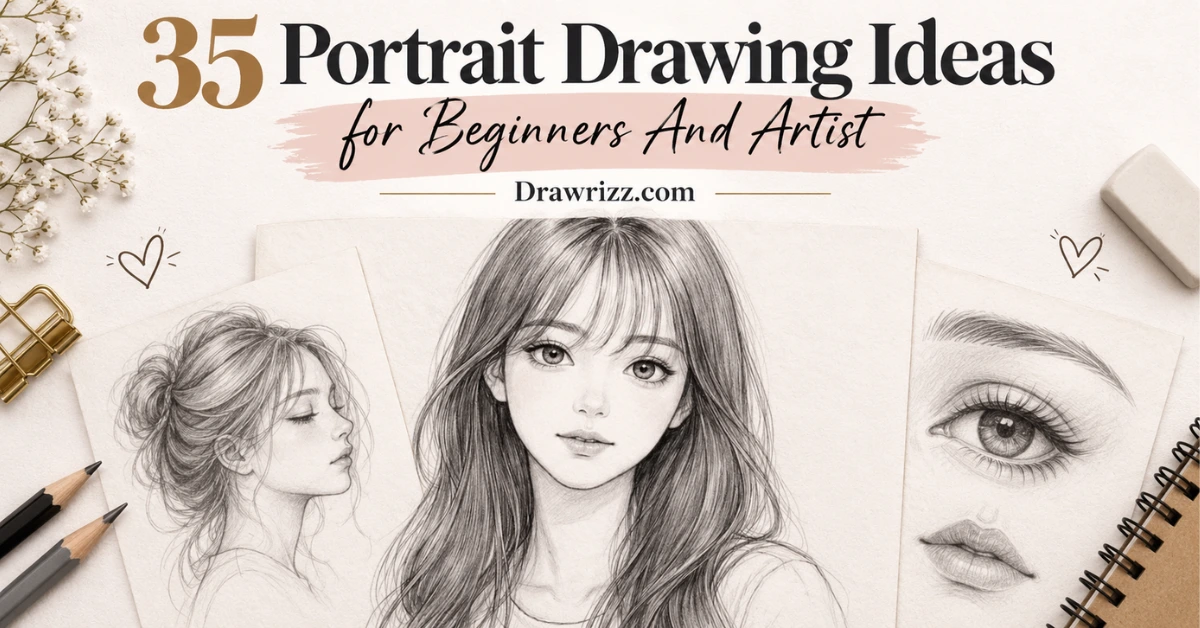
Drawing faces gives you an endless variety of subjects to explore. A small change in expression, hairstyle, viewing angle, lighting, or pencil technique can completely transform the mood of your artwork.
If you’re searching for portrait drawing ideas, this collection includes 35 creative subjects ranging from easy face sketches and aesthetic pencil art to expressive studies and more detailed graphite work. Some are simple enough for beginners, while others offer an interesting challenge as your skills develop.
You don’t have to make every face perfectly realistic. Loose lines, unfinished areas, gentle shading, and small imperfections can give artwork personality and make a sketchbook feel more expressive. Adding small botanical details around a portrait can also create a softer look, especially if you enjoy experimenting with flower drawing ideas.
Grab your pencil, choose an idea that interests you, and make it your own.
Easy Portrait Drawing Ideas for Beginners
If you’re new to drawing faces, begin with uncomplicated poses and clearly visible features. Simple compositions make it easier to concentrate on proportions, shapes, and basic shading without becoming overwhelmed by details.
1. Simple Front-Facing Face
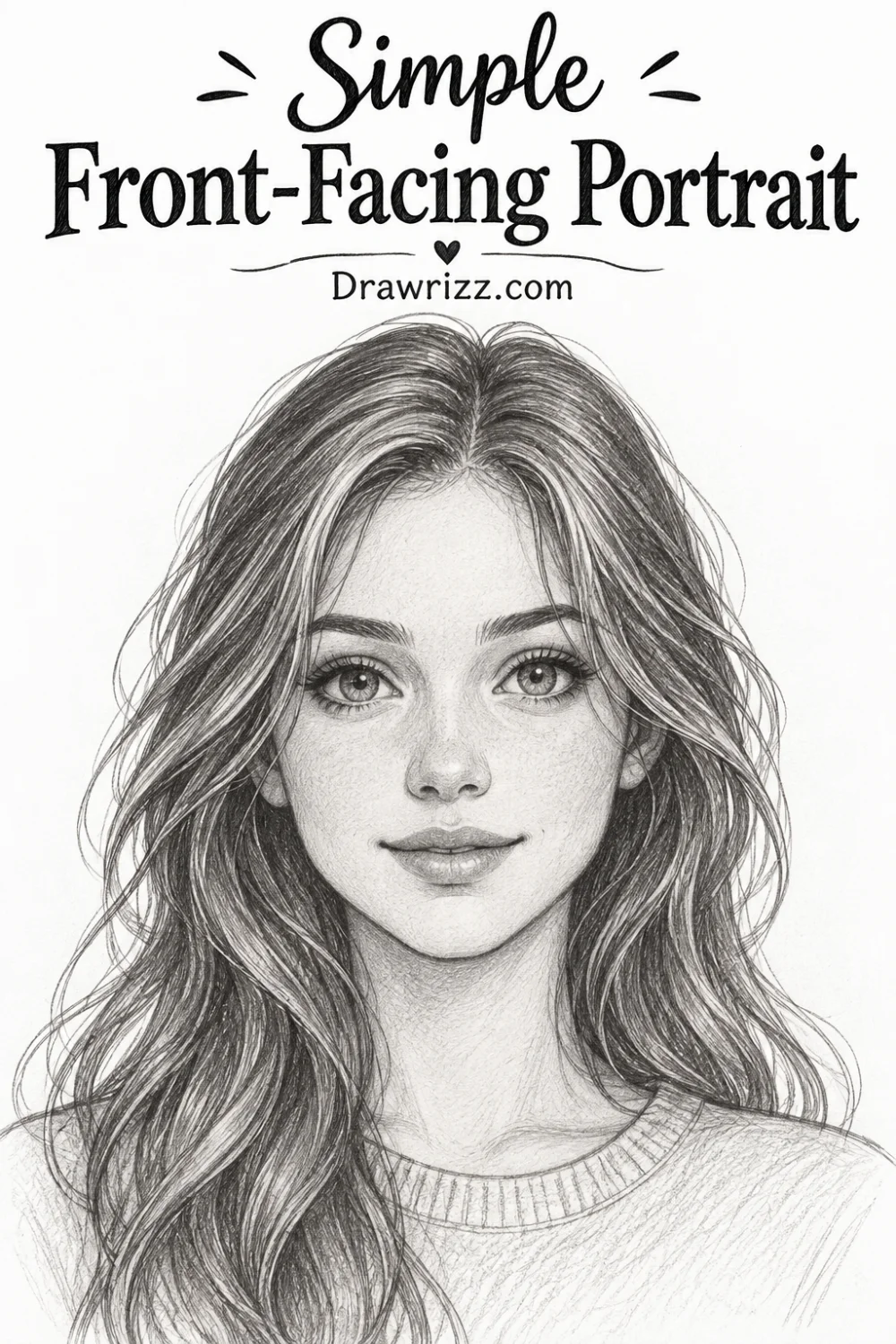
Start with a person looking directly toward the viewer. Use a relaxed expression, naturally shaped eyes, a softly defined nose, and a simple hairstyle.
Keep your initial lines light and avoid trying to make every detail photorealistic. The straightforward angle gives you plenty of room to observe facial balance and symmetry.
2. Soft Side Profile
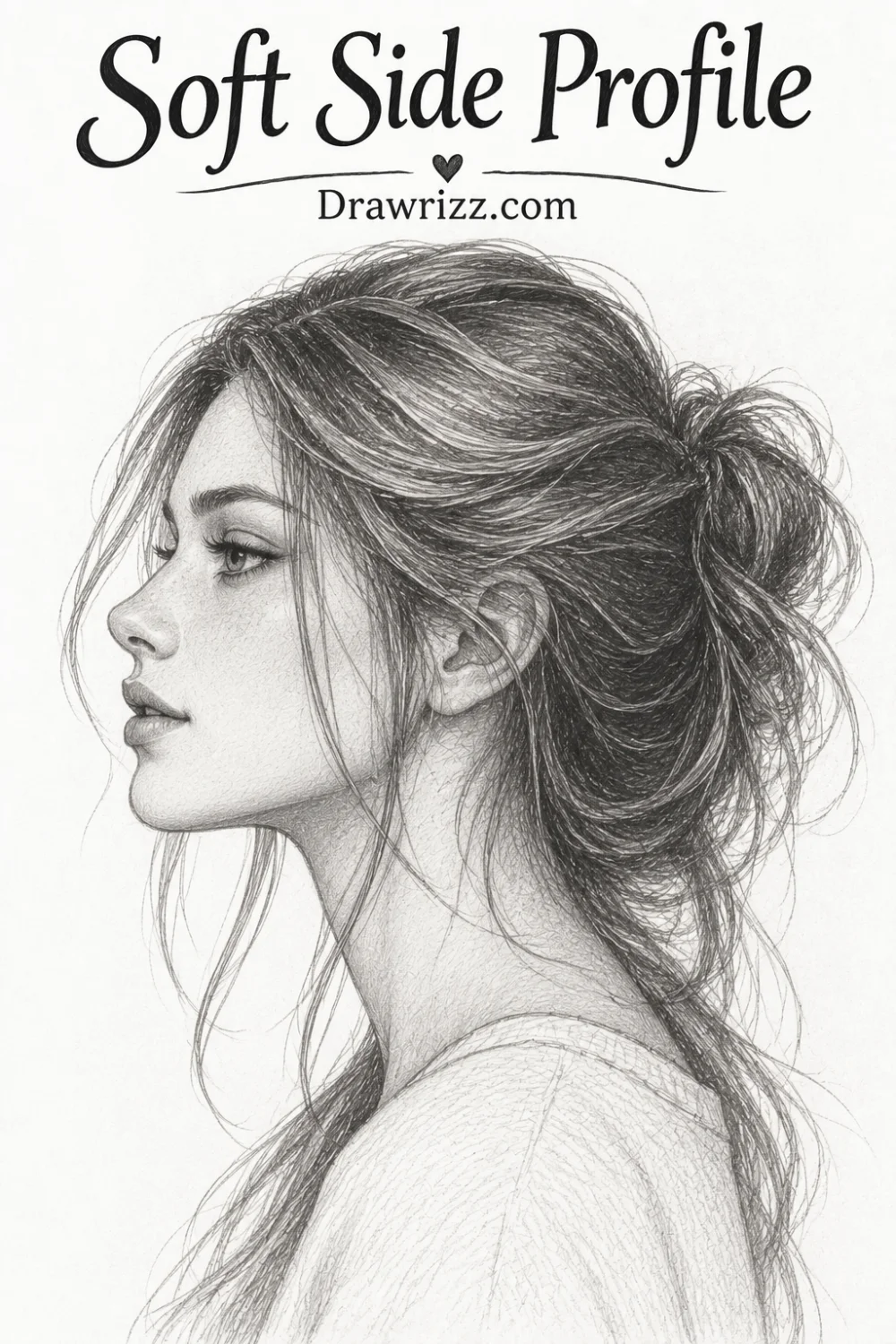
Turn the head completely sideways and focus on the silhouette created by the forehead, nose, lips, chin, and neck.
Long hair flowing behind the face can create an elegant composition. Leaving a few areas unfinished also gives the artwork a relaxed sketchbook quality.
3. Three-Quarter View
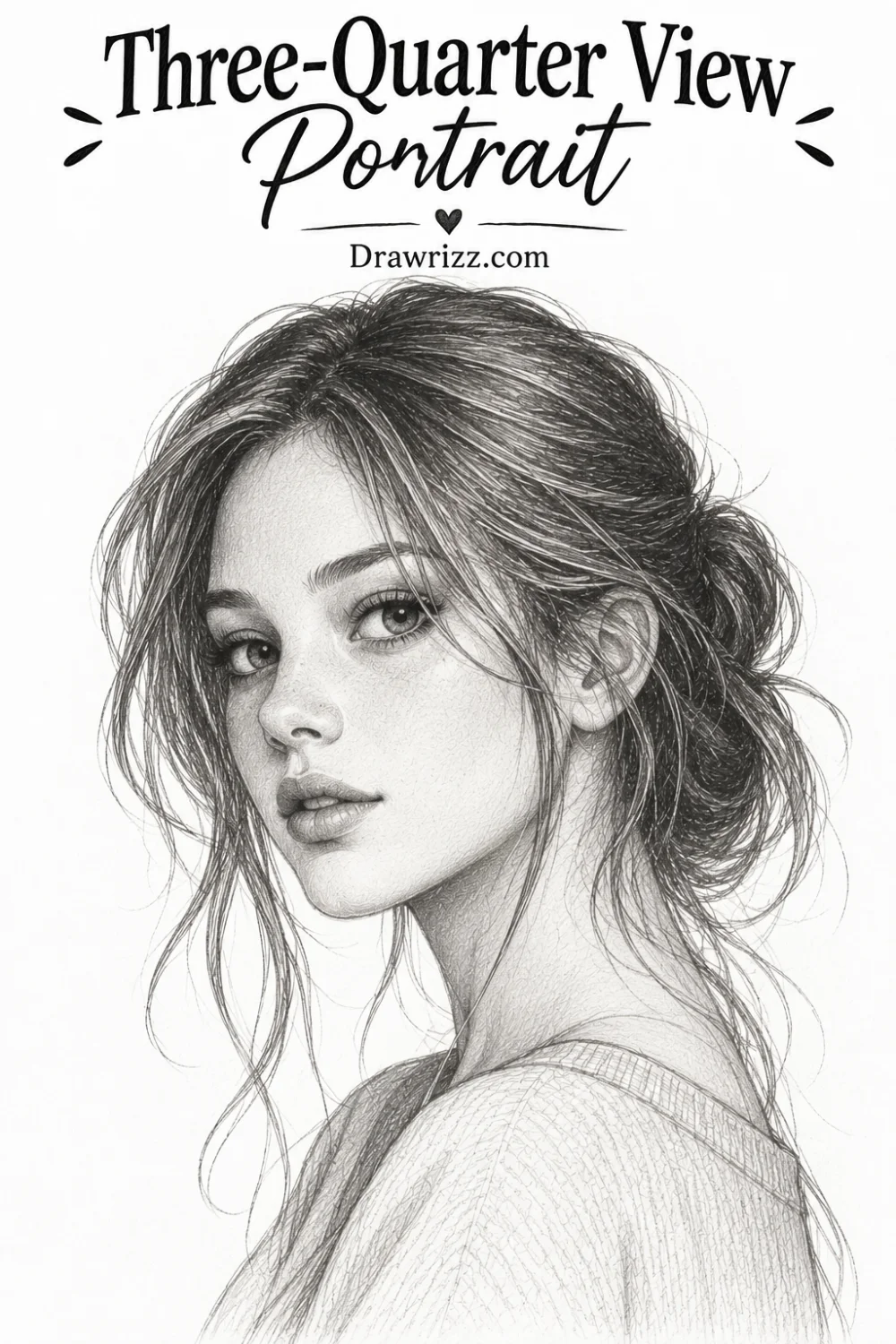
Turn the subject slightly away instead of showing the face directly from the front. One side will appear narrower, creating a stronger sense of depth.
This angle is a useful next step after practicing basic front and side views.
4. Girl With Long Wavy Hair
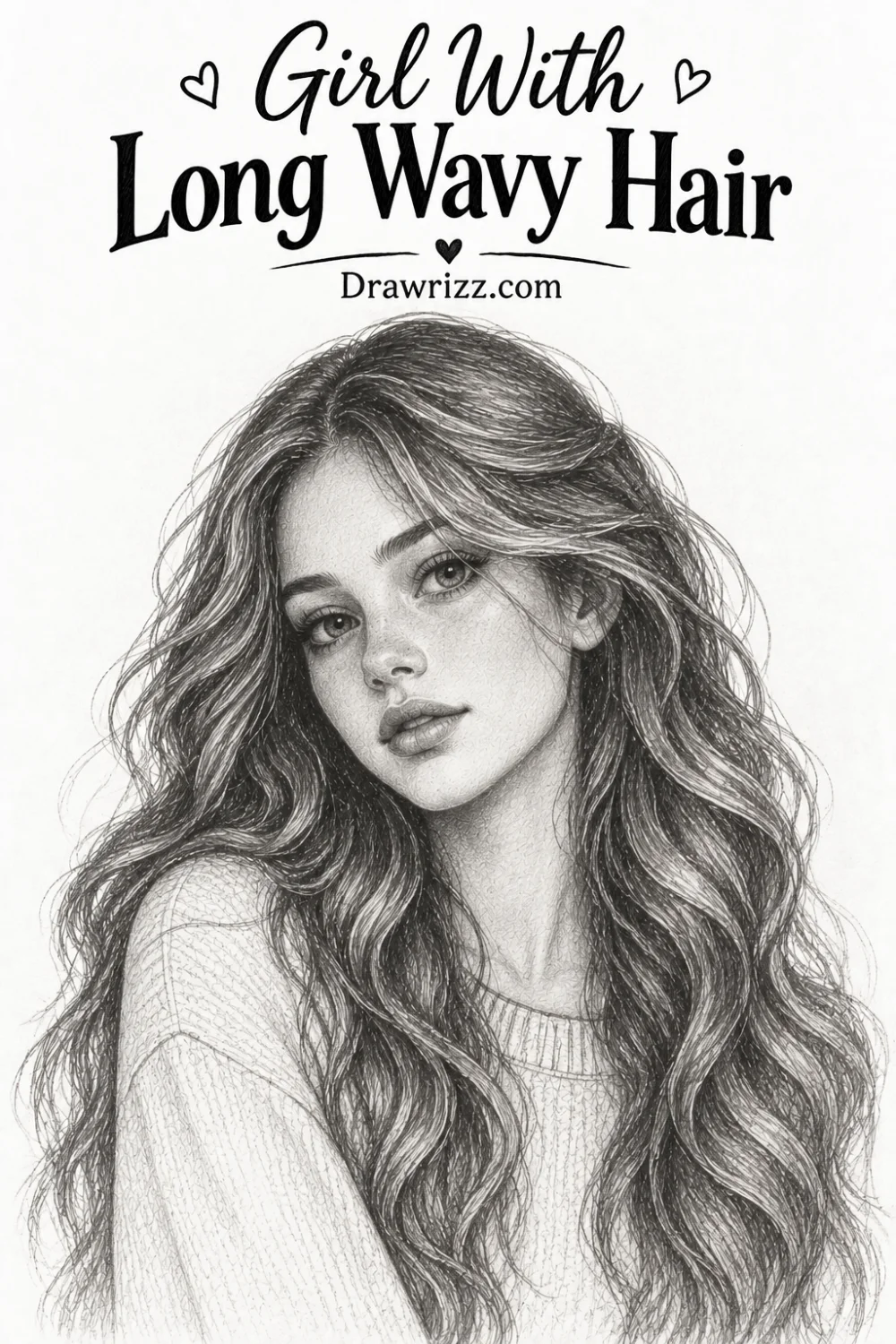
Make the hairstyle the main visual feature. Build long waves with flowing pencil strokes, overlapping sections, and a few darker areas where the hair naturally creates shadow.
Keep the facial details relatively delicate so the texture of the hair remains noticeable.
5. Face With Closed Eyes
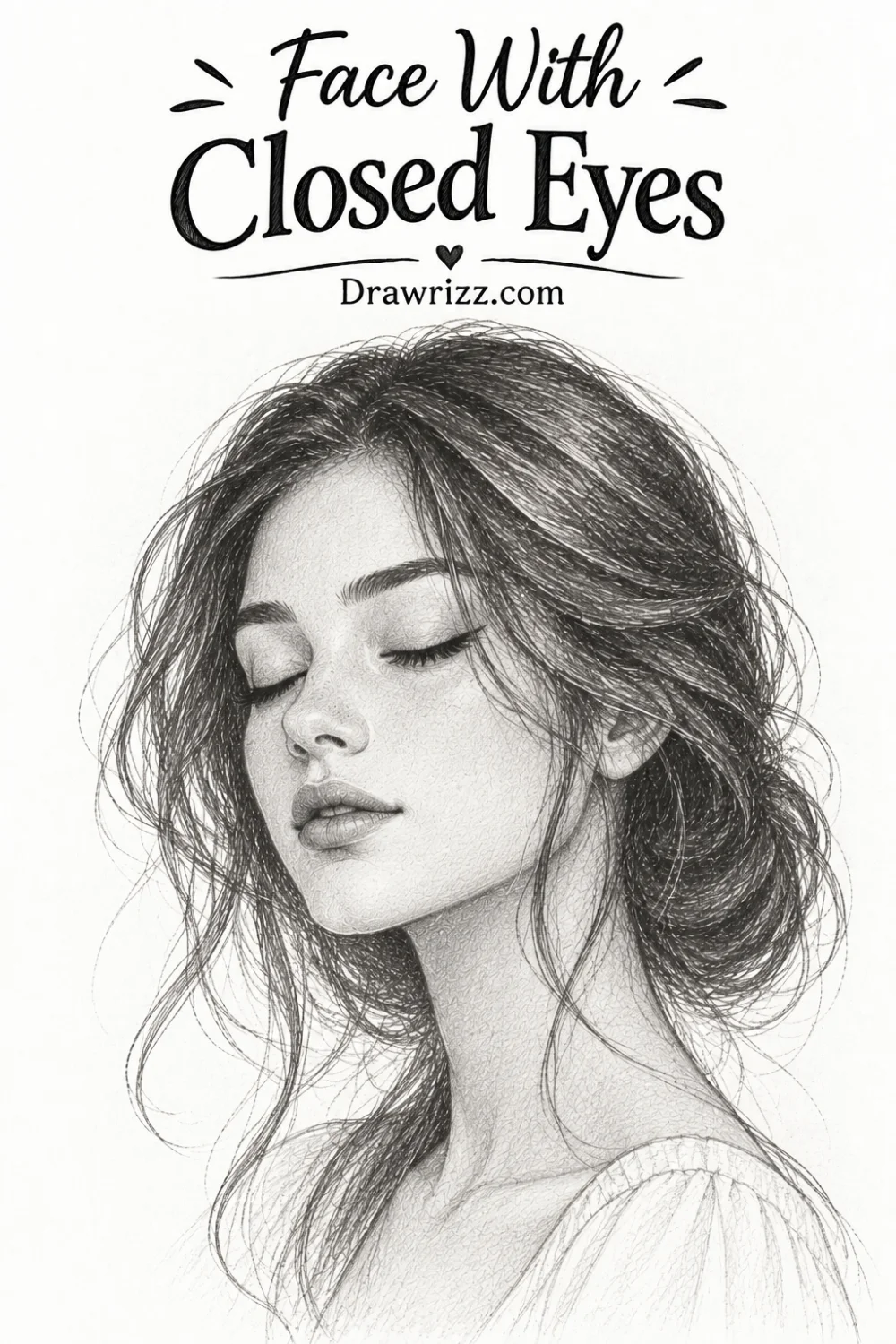
Closed eyes can create a peaceful and dreamy mood. Try a slightly lowered head, relaxed eyebrows, delicate eyelashes, and very soft shading around the cheeks.
It’s a simple subject that can still look beautiful without requiring highly detailed eyes.
6. Simple Male Face
Experiment with different facial characteristics by sketching a male subject. You might explore a defined jaw, short textured hair, prominent eyebrows, or subtle facial hair.
Try to balance stronger shapes with softer transitions rather than making every feature angular.
7. Face With Glasses
Glasses can instantly add character to a drawing. Experiment with round, rectangular, thin, or slightly oversized frames.
Sketch the frames lightly at first so you can adjust their position around the eyes and nose before adding darker lines.
Aesthetic Face Sketch Ideas
A beautiful drawing doesn’t require an elaborate background. Hair, accessories, expressions, clothing, and line quality can create plenty of visual interest on their own.
8. Girl With Curtain Bangs
Frame the face with long hair and soft curtain bangs. Allow a few strands to fall naturally across the forehead rather than arranging everything symmetrically.
Delicate graphite around the eyes and underneath overlapping hair can add subtle depth.
9. Messy Bun Sketch
Gather the hair into a loose bun while leaving several strands around the forehead, ears, and neck.
The combination of carefully placed facial features and loosely drawn hair can produce a relaxed, modern sketchbook aesthetic.
10. Flower in the Hair
Add a single daisy, rose, or small wildflower beside the hair. Keep the botanical detail relatively simple so it complements the person instead of becoming the main subject.
This is a lovely way to combine botanical elements with figurative art.
11. Freckled Face
Scatter tiny irregular marks across the cheeks and bridge of the nose to suggest natural freckles.
Avoid making every freckle identical. Variation in size, darkness, and spacing will make the effect feel more organic.
12. Girl Wearing a Beanie
A beanie introduces an easy clothing detail while creating a strong silhouette around the head.
Add a few sections of hair emerging from underneath the hat and use gentle lines to suggest folds in the fabric.
13. Turtleneck Sketch
Draw the head and shoulders above a high folded collar. The simple clothing shape naturally frames the face without requiring a complicated outfit.
You can keep the sweater lightly rendered while adding more detail around the eyes and hair.
14. Minimal Pencil Face
Use clean graphite lines with very little shading. Instead of outlining every edge, allow selected sections of the drawing to fade naturally into the white paper.
This unfinished approach can feel light, contemporary, and expressive.
Expressive Face Drawing Ideas
Expressions can tell a story before you add any background or decorative elements. Small changes around the eyebrows, eyelids, cheeks, and mouth can completely alter the emotional character of a drawing.
15. Natural Smile
Try capturing a relaxed smile rather than an exaggerated grin. Notice how the cheeks lift and how the shape of the eyes changes slightly with the expression.
A few carefully placed lines can suggest happiness without making the face look overly detailed.
16. Laughing Expression
For something more energetic, draw a person caught in the middle of a laugh.
Slightly closed eyes, raised cheeks, an open mouth, and loose strands of hair can help communicate movement. Perfect symmetry isn’t necessary because natural expressions rarely remain completely still.
17. Thoughtful Look
Show the subject gazing slightly away from the viewer. Soften the eyes, relax the mouth, and use gentle shadows to create a quiet, reflective mood.
Plenty of empty space around the figure can make the composition feel even calmer.
18. Surprised Expression
Experiment with raised eyebrows, wider eyes, and slightly parted lips.
Keep the changes subtle if you want a realistic result, or exaggerate them slightly if you prefer a more stylized approach.
19. Serious Face
Focused eyes, relaxed lips, and stronger areas of shadow can create a powerful mood.
A blank background works especially well here because nothing competes with the subject’s gaze.
20. Teary Eyes
Emotion can be suggested without drawing dramatic tears. Try slightly lowered eyebrows, moisture around the eyes, and a restrained facial expression.
A closer composition can make these small details easier to notice.
Creative Portrait Drawing Ideas
Once basic face sketches become comfortable, experiment with composition and perspective. Changing the angle or partially obscuring the subject can make familiar features feel completely new.
21. Face Partly Hidden by Hair
Allow loose strands to cover one eye or part of the cheek.
The visible features become a stronger focal point, while layered pencil strokes in the hair give you plenty of opportunity to experiment with texture.
22. Looking Up
Tilt the head upward and direct the eyes above the viewer.
The unusual viewpoint changes the relationship between the nose, chin, eyes, and forehead, making it a useful study in perspective as well as an interesting composition.
23. Looking Down
A downward gaze often creates a softer, more introspective feeling. The upper eyelids become prominent while loose hair can naturally fall toward the cheeks.
Keep the clothing understated if you want attention to remain on the face.
24. Over-the-Shoulder View
Angle the shoulders away while turning the head back toward the viewer.
This introduces movement into the composition and lets you explore the relationship between the head, neck, and upper body.
25. Half-Face Composition
Instead of showing the entire head, crop the artwork so only one side is visible.
Concentrate on a single eye, part of the nose, lips, eyebrow, and surrounding hair. The unusual crop can make even a simple graphite sketch visually striking.
26. Hand Resting on the Cheek
Add a relaxed hand supporting the chin or gently touching the side of the face.
Hands introduce another interesting form to study, but they don’t need to dominate the composition. Keep the pose natural and avoid covering the most expressive features.
27. Windblown Hair
Use long sweeping marks to suggest hair moving across or away from the face.
Begin with larger flowing sections instead of drawing individual strands everywhere. Fine lines can then be added selectively to create texture and movement.
Realistic Pencil Drawing Ideas
If you want a greater challenge, choose subjects where light, age, texture, or subtle facial details become more important. Realism often comes from careful observation and controlled values rather than adding detail everywhere.
28. Detailed Eyes
Create a close-up in which the eyes receive the greatest level of detail.
Build darker pupils, irises, lashes, and upper eyelids while keeping surrounding areas softer. The difference in contrast naturally guides attention toward the gaze.
29. Dramatic Light and Shadow
Imagine strong light falling across one side of the face while the opposite side remains partially in shadow.
Use untouched paper for the brightest areas and gradually build darker graphite values elsewhere. This can create impressive depth without requiring a detailed background.
30. Curly Hair Study
Curly hair offers plenty of opportunities to explore texture and value.
Instead of drawing dozens of identical curls, look at the hairstyle as larger groups of light and shadow. Add selected loops and individual strands afterward to suggest texture.
31. Elderly Face
Older subjects provide fascinating opportunities to study changing facial forms.
Explore forehead lines, softer skin, expressive eyes, and subtle creases around the mouth. Avoid outlining every wrinkle with a dark mark; many can be communicated more naturally through gentle shifts in tone.
32. Child’s Face
Children generally have softer shapes and different proportions from adults, making them an interesting subject to study.
Use restrained shading and avoid overly heavy outlines. Paying attention to the overall head shape and placement of the features is often more important than adding tiny details.
Unique Ideas for Your Sketchbook
Your sketchbook doesn’t have to be filled only with realistic faces. Combining different subjects, leaving construction marks visible, or experimenting with presentation can produce more personal artwork.
33. Self-Portrait From a Mirror
Use your reflection as a reference and draw what you actually observe rather than what you expect your face to look like.
Don’t worry about achieving a flawless likeness. The study can be realistic, minimal, loose, or deliberately unfinished.
34. Floral Face Sketch
Frame the subject with a few daisies, leaves, wildflowers, or delicate stems.
Leave enough white space between the botanical details and facial features so both elements remain easy to distinguish. You can also keep the flowers lighter than the eyes and hair to maintain a clear focal point.
35. Full Sketchbook Study
Fill an entire page with smaller studies rather than completing one large drawing.
Combine a front view, side profile, three-quarter angle, eye studies, lips, hairstyles, and several expressions. Keep some construction lines and unfinished marks visible to create the feeling of an authentic practice page.
Portrait Drawing Ideas by Skill Level
Choosing subjects that suit your current experience can make drawing sessions more enjoyable.
Beginners can explore front-facing faces, profiles, closed eyes, simple hairstyles, minimal line art, and basic expressions. These subjects allow you to concentrate on proportion and placement before tackling difficult angles.
Intermediate artists can experiment with three-quarter views, glasses, curly hair, stronger expressions, upward and downward angles, or hands near the face.
More experienced artists may enjoy dramatic lighting, mature faces, complex viewpoints, subtle emotions, detailed graphite textures, and pages containing several observational studies.
There is no need to rush between difficulty levels. Redrawing the same subject after a few weeks or months can also be an interesting way to notice changes in your technique.
What Makes a Face Drawing More Interesting?
Technical detail isn’t the only thing that makes artwork engaging. Sometimes one clear creative choice has more impact than hours of extra rendering.
Try changing the expression, angle, hairstyle, lighting, crop, or level of detail. A quiet side profile, an intense gaze, loose hair crossing the face, or strong shadows can transform an otherwise straightforward sketch.
You can also experiment with line quality. Loose graphite marks create energy, while smooth tonal transitions produce a softer appearance. Combining both approaches can give the finished piece more character.
Simple Tips for Better Face Sketches
Begin with light lines that are easy to adjust. Establish the overall shape of the head before spending too much time on individual eyes, eyelashes, lips, or strands of hair.
Think about relationships between features rather than treating each feature as an isolated symbol. Compare distances, angles, and shapes as you work.
References can also be extremely useful. Photographs, mirrors, and real-life observation introduce facial structures and viewpoints that may be difficult to invent accurately from imagination.
When shading, don’t feel that every part of the page needs graphite. Leaving areas of clean paper beside darker values can create stronger depth and a more interesting finish.
Which Idea Should You Try First?
For a complete beginner, a simple front-facing face is a sensible starting point. After that, experiment with a side profile and eventually move toward a three-quarter angle.
If you’re already comfortable with basic proportions, choose an idea based on the skill you want to practice. Curly hair is useful for texture, laughter introduces expression, and directional lighting gives you an opportunity to explore value and contrast.
You can also ignore difficulty entirely and choose whichever subject inspires you most. Enjoying the idea often makes it easier to spend time observing and refining the drawing.
Final Thoughts
These portrait drawing ideas can provide starting points for everything from quick pencil exercises to detailed sketchbook pages. You don’t have to follow any concept exactly as described.
Change the expression, hairstyle, age, viewpoint, clothing, or graphite technique. A single concept can lead to several completely different pieces of artwork.
Most importantly, give yourself space to experiment. Some sketches will become polished finished pieces, while others may remain quick studies. Both can help you explore new techniques, develop stronger observation skills, and discover the type of figurative artwork you most enjoy creating.
3 thoughts on “35 Portrait Drawing Ideas for Beginners And Artist”