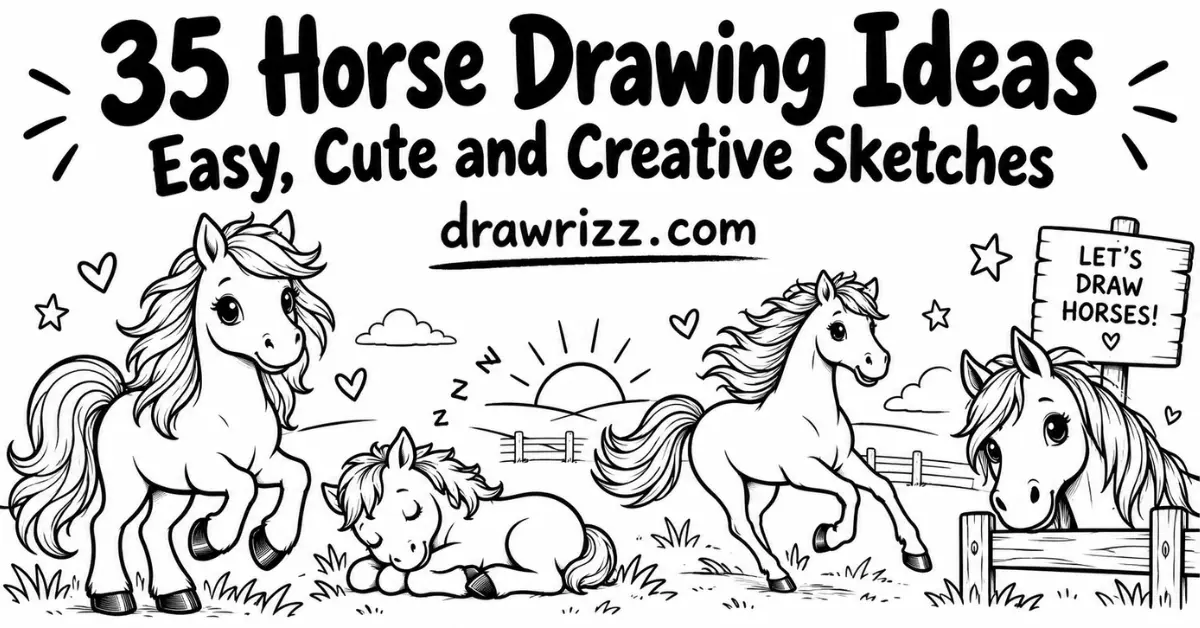
Finding fresh Horse Drawing Ideas can make sketchbook practice more enjoyable, especially when you explore different poses, styles, and levels of detail. You do not need to begin with complicated anatomy or highly realistic artwork. Simple outlines, pencil studies, cute characters, and expressive poses can all help you build confidence while keeping the creative process fun.
This collection includes beginner-friendly subjects as well as more detailed concepts for anyone looking for new inspiration. Pick a design that suits your current skill level, use it as a starting point, and add your own artistic touches along the way.
Easy Horse Drawing Ideas for Your Sketchbook
A blank page can feel less intimidating when you start with a clear concept. The following ideas range from minimal line art and relaxed pencil studies to dynamic poses and imaginative compositions.
If you enjoy exploring other subjects, portrait drawing ideas can also help you practice observation, proportions, and shading. You can work with graphite, ink, colored pencils, or whichever medium feels most comfortable.
1. Simple Horse Outline
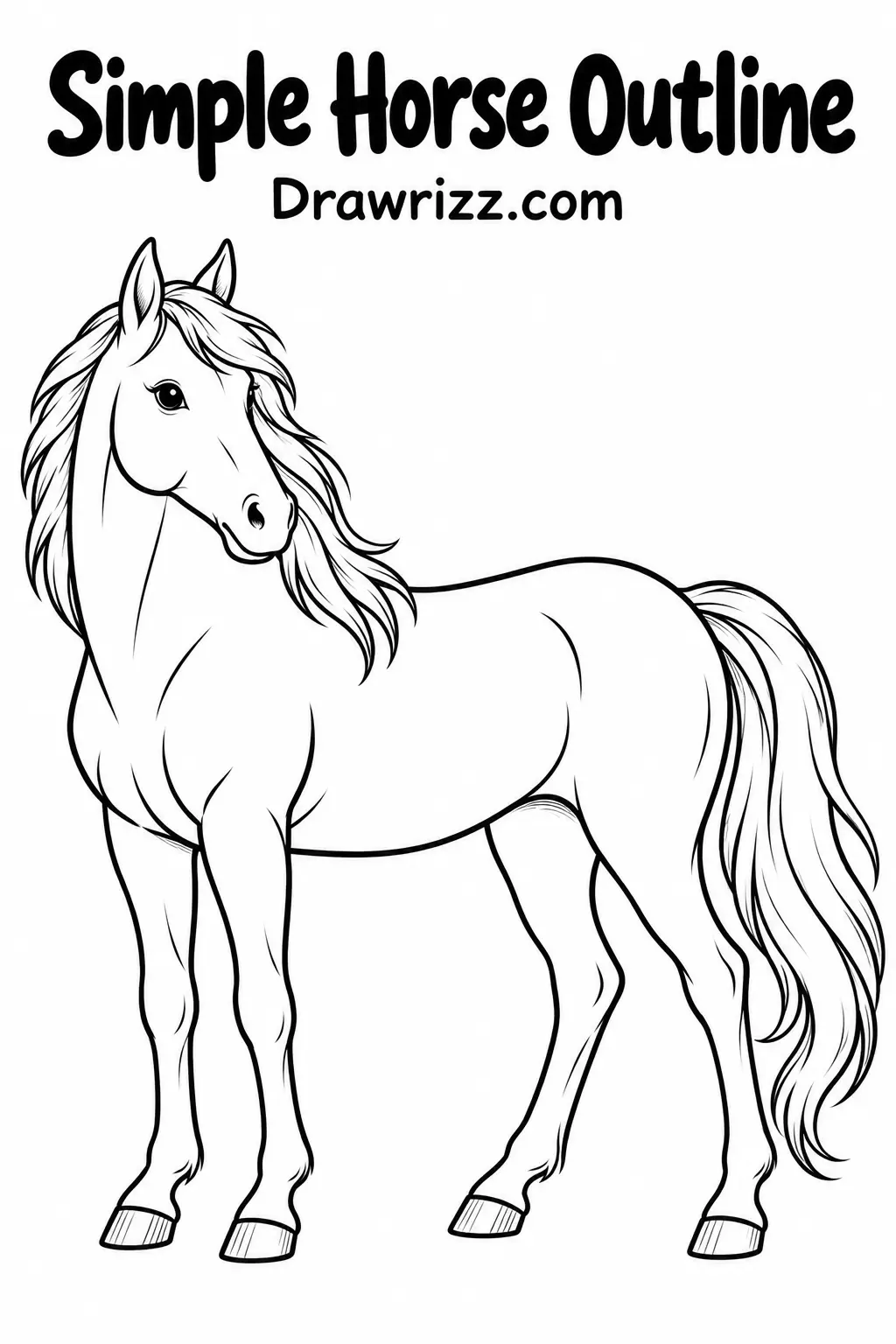
Start with a clean side-view outline using smooth, confident curves. Focus on the long face, pointed ears, gently arched neck, body, slim legs, mane, and flowing tail.
Keep interior details to a minimum. This allows the silhouette to do most of the visual work and makes the subject approachable for someone practicing animal proportions.
2. Easy Head Sketch
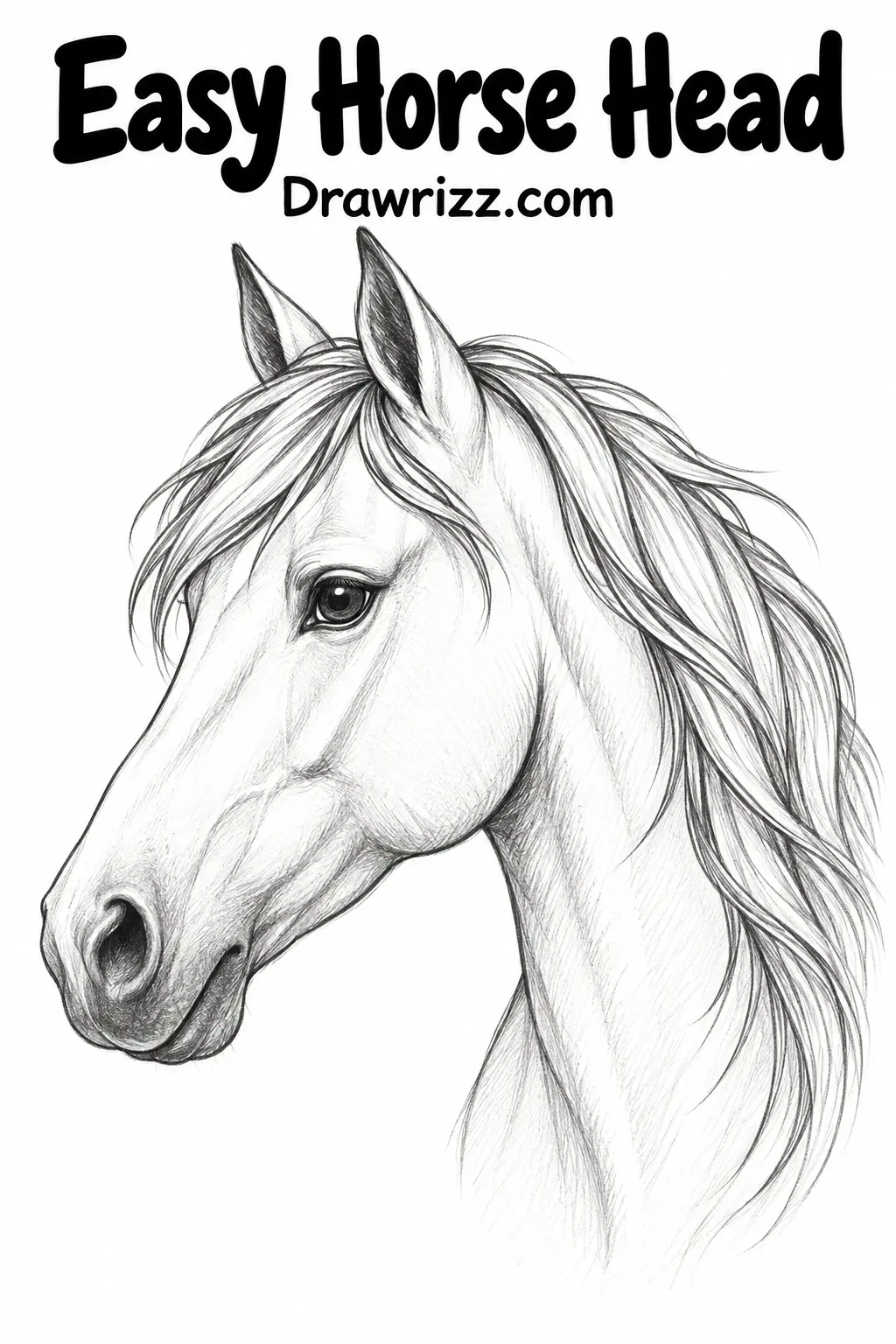
Concentrating on the head and neck is a good alternative to tackling the entire body. A side profile makes it easier to observe the forehead, muzzle, jaw, ears, and eye.
Add several loose strokes for the mane and keep the shading light. Even a relatively simple study can become expressive when the eye and facial curves are carefully placed.
3. Cute Cartoon Character
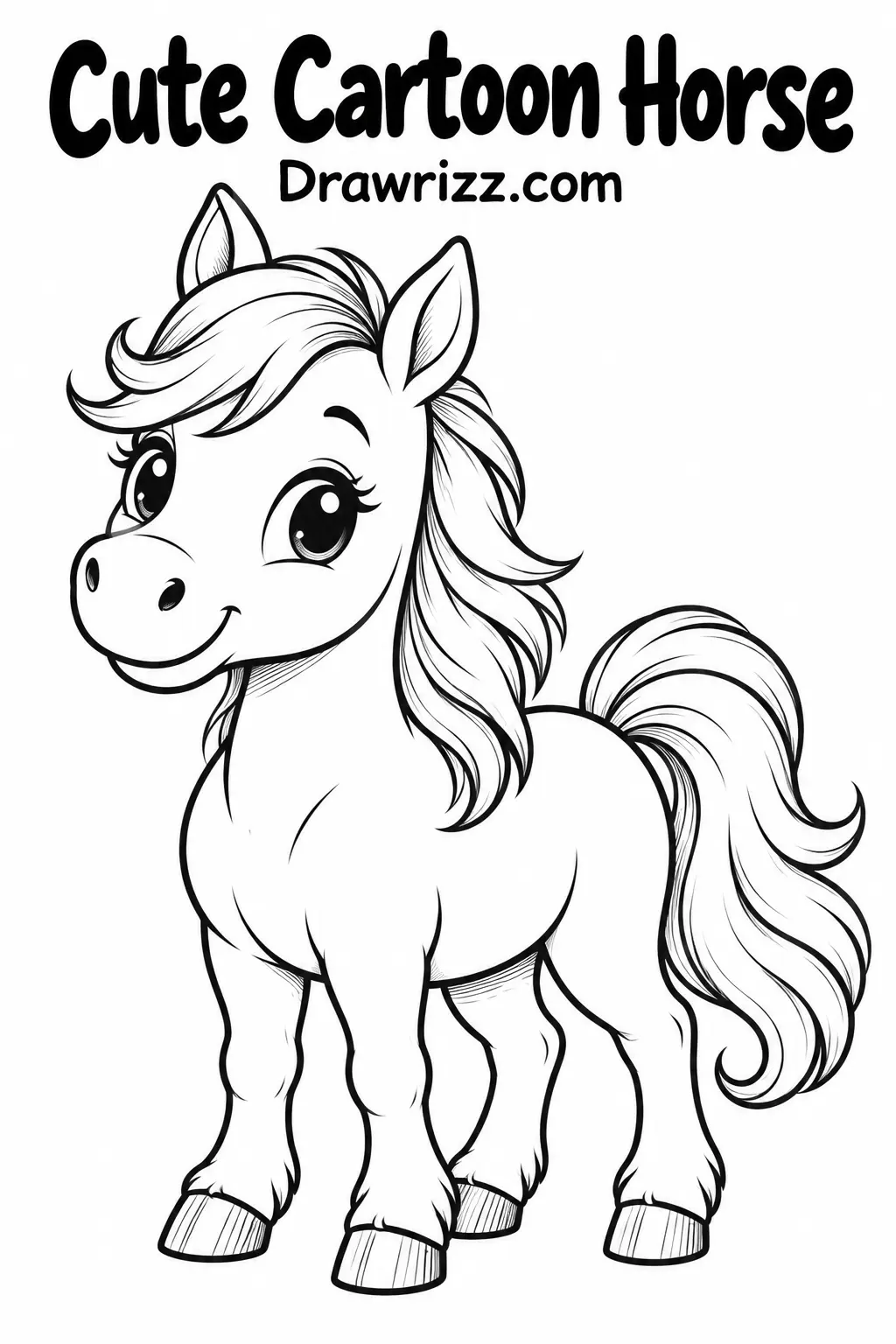
Create a playful version with a rounded body, slightly oversized head, short legs, large eyes, and fluffy hair. Simplifying the anatomy gives you more freedom to experiment with personality.
Try a cheerful expression or a tiny smile. This style is particularly suitable for younger artists and anyone who enjoys cute sketchbook doodles.
4. Face Close-Up
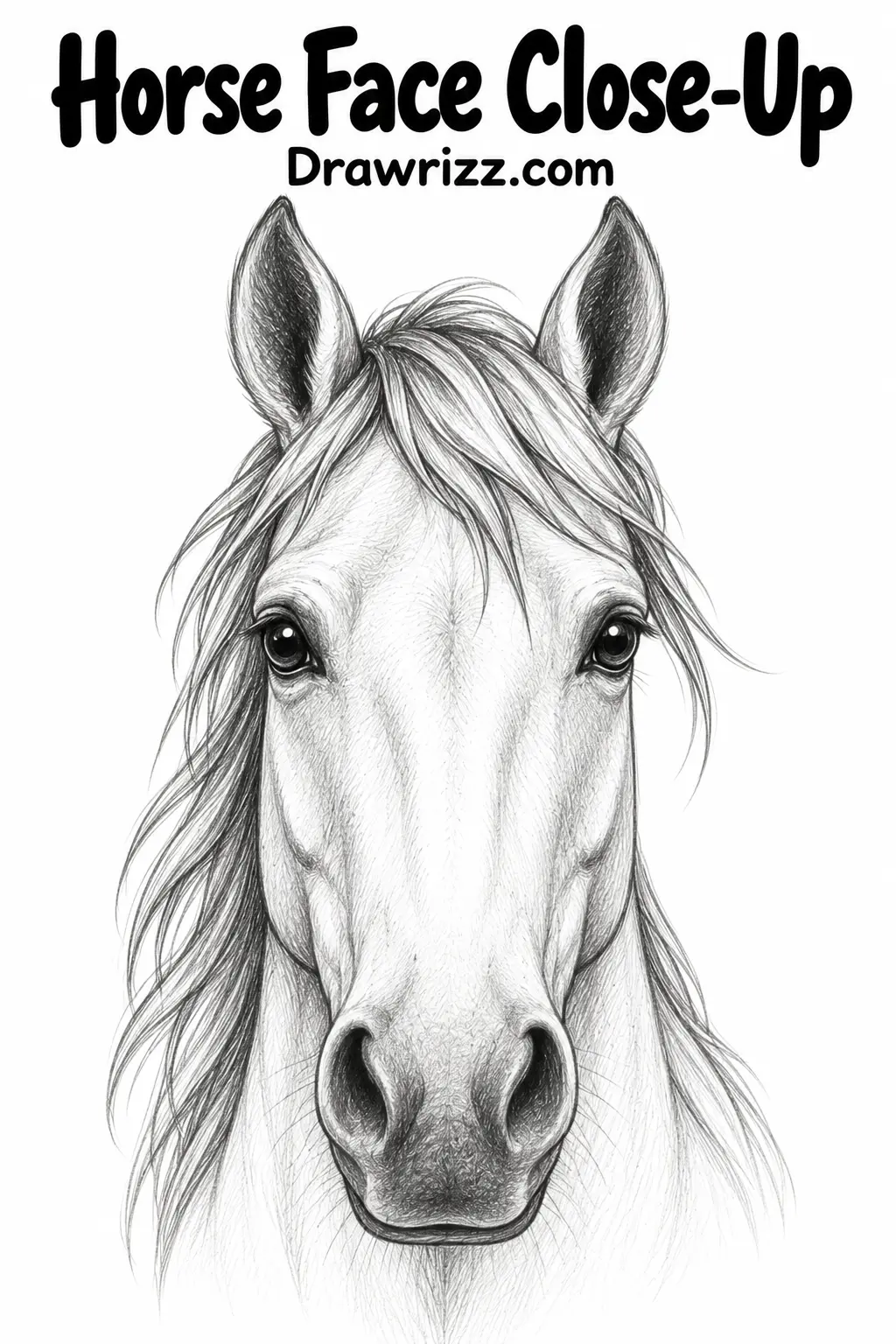
A front-facing portrait offers an interesting symmetry exercise. Begin with the central shape of the face before positioning the eyes, ears, muzzle, and nostrils.
Light graphite around the cheeks and nose can create depth. Keep some areas completely white so the finished artwork does not become unnecessarily heavy.
5. Flowing Mane Study
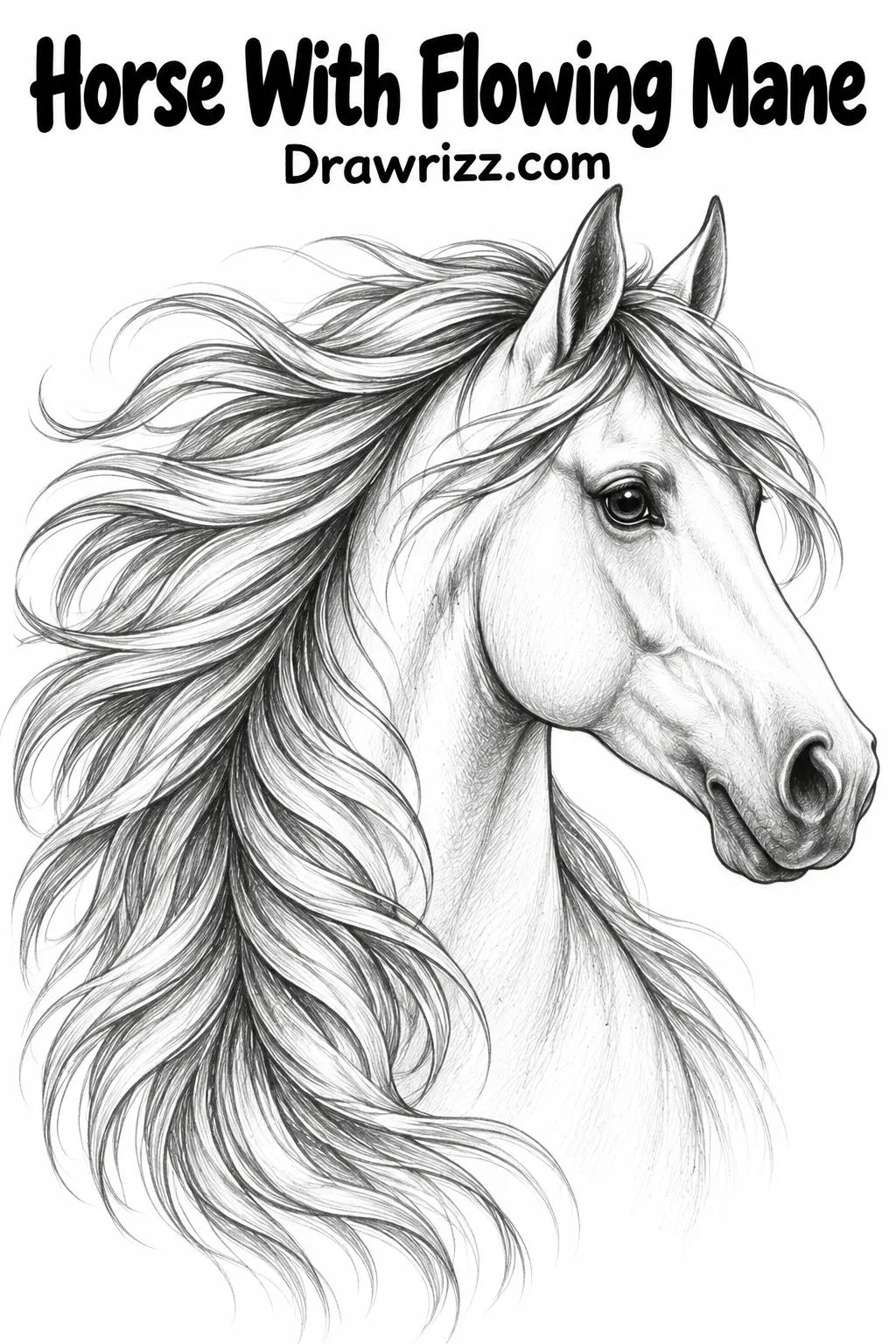
Make the mane the main attraction. Draw a graceful head and upper neck, then create long sweeping strands moving naturally toward one side.
Mix thin, delicate strokes with several darker sections. This variation makes the hair appear layered and gives an otherwise simple composition a sense of movement.
6. Simple Pencil Sketch
Loose graphite work can look beautiful without perfectly polished outlines. Begin with faint construction marks and gradually strengthen the contours that define the final form.
Leave a few lighter guide marks visible if you like the authentic sketchbook aesthetic. Gentle shading around the neck, chest, and hindquarters can suggest three-dimensional form.
7. Aesthetic Equine Portrait
Try a minimalist portrait built from only a few elegant lines. A curved neck, delicate facial profile, expressive eye, and wispy mane can create a sophisticated result.
Allow plenty of blank space around the subject. Negative space often makes minimal artwork feel cleaner and more intentional.
8. Jumping Pose
For something energetic, capture the animal in midair. Extend the neck slightly forward while bending the front legs and positioning the hind legs naturally behind the body.
Let the mane and tail follow the direction of movement. These flowing details can make the pose feel more convincing without adding complicated scenery.
9. Running Pose
A galloping figure is ideal for practicing gesture and movement. Instead of starting with details, establish the direction of the spine and major body masses first.
Extend some legs while bending others, then add a windswept mane and trailing tail. A few loose gesture marks can strengthen the feeling of speed.
10. Standing Side View
A relaxed side profile gives you a clear look at overall proportions. Pay attention to how the head connects to the neck and how the torso sits between the front and back legs.
Once the basic structure looks balanced, refine the hooves, facial details, mane, and tail. Keep the pose calm and uncomplicated.
11. Detailed Eye Study
Sometimes one small feature can fill an entire sketchbook page. Draw a large expressive eye and carefully observe the eyelid, lashes, highlights, and surrounding hair.
Build darker values gradually rather than pressing hard immediately. A tiny untouched highlight inside the eye can make the study feel surprisingly lifelike.
12. Nose and Muzzle Study
The muzzle offers soft curves and subtle textures that are easy to miss when working on a full figure. Focus on the nostrils, mouth line, chin, and short facial hair.
Use gentle value changes around the nose to suggest volume. This is a useful small-scale exercise for anyone wanting to improve graphite control.
13. Braided Mane Portrait
Add a decorative element by creating a neat braid along the upper neck. Repeating sections of woven hair provide an interesting contrast against the smoother facial outline.
You can keep the rest of the portrait relatively minimal so the braid becomes the most detailed feature.
14. Cute Baby Foal
Young foals have proportions that can create especially charming sketches. Try a compact body, long slender legs, short mane, delicate muzzle, and gentle expression.
Avoid excessive shading if you want a softer appearance. Clean lines and a few carefully chosen details are often enough.
15. Mare and Foal
Create a warm composition by placing an adult beside a smaller foal. Their difference in scale immediately communicates the relationship.
A nose-to-nose interaction or protective standing pose can add emotion without requiring a detailed background. Keep the body language relaxed and natural.
16. Floral Portrait
Combine animal and botanical drawing by surrounding a graceful portrait with wildflowers, leafy stems, or tiny daisies.
Use lighter lines for the botanical elements so they complement rather than overpower the central figure. This approach works particularly well for decorative sketchbook pages.
17. Peaceful Meadow Scene
Place a standing figure among loosely drawn grass and a handful of small wildflowers. A few distant field lines can suggest an outdoor environment without creating a complicated landscape.
Keep background marks lighter than the main subject. The difference in value helps establish depth.
18. Grazing Pose
Lower the head toward the ground and allow the neck to create a long flowing curve from the shoulders. This immediately produces a silhouette that differs from the usual standing profile.
Add only a few grass strokes near the muzzle. The simple setting keeps attention on posture and anatomy.
19. Rearing Pose
A rearing figure creates an energetic vertical composition. Position the body over the hind legs while raising and bending the front legs.
An arched neck, lifted head, flowing mane, and sweeping tail can reinforce the upward motion. Begin with loose gesture lines before refining the anatomy.
20. Bold Silhouette
Remove almost all interior detail and work entirely with the outer shape. Pointed ears, a recognizable muzzle, strong neck, four legs, and a distinctive tail should make the subject readable immediately.
This exercise helps you understand how much information can be communicated through contour alone.
21. Minimalist One-Line Design
Try creating a head and neck with one continuous flowing line. Move naturally through the ears, forehead, muzzle, jaw, and neck before suggesting a few strands of mane.
Do not worry if the line is not perfectly symmetrical. Small imperfections often make continuous-line artwork more expressive.
22. Geometric Design
Replace soft organic curves with straight lines, triangles, and polygon-like shapes. You can construct either a head portrait or a complete figure while maintaining a recognizable silhouette.
This approach produces a modern result and encourages you to think about the subject as a collection of simplified planes.
23. Butterfly Moment
Draw a gentle profile looking toward a small butterfly hovering close to its muzzle. The space between the two subjects becomes an important part of the composition.
Keep the butterfly delicate and relatively small. This creates a quiet focal point without distracting from the larger figure.
24. Crescent Moon Composition
Combine an elegant profile with a crescent moon and a restrained scattering of tiny stars. A long flowing mane can enhance the dreamy atmosphere.
Avoid filling every empty area with decorative elements. Plenty of negative space will help the composition maintain its aesthetic quality.
25. Long Wavy Mane
Turn ordinary hair into an exaggerated decorative feature. Create long overlapping waves that cascade around the neck using different line weights.
Keep facial details relatively understated so the viewer’s attention naturally moves toward the layered texture.
26. Cute Doodle
A tiny doodle can be just as enjoyable as a detailed study. Use a rounded body, short legs, simple face, fluffy mane, and curved tail.
Add a few miniature stars or hearts if you want additional personality. This is a fun option for filling small empty spaces in a sketchbook.
27. Saddle Study
Draw a calm standing figure and introduce a simple saddle and saddle pad. These accessories provide extra shapes and textures to explore without requiring a rider.
Keep the tack relatively uncomplicated at first. Once you are comfortable with the basic placement, you can experiment with more detailed equestrian equipment.
28. Wild Mustang Sketch
Use energetic graphite marks to capture a free-moving mustang. A raised head, strong neck, windswept mane, and expressive stance can communicate a wild character.
Allow some strokes to remain rough and unfinished. Controlled looseness often works especially well for movement-focused artwork.
29. Realistic Graphite Portrait
For a more challenging project, create a detailed head and upper-neck study. Observe how shadows develop around the eyes, cheek, jaw, muzzle, and mane.
Build values gradually and preserve lighter highlights. Instead of drawing every strand of hair individually, suggest texture through changes in pencil direction and pressure.
30. Colored Pencil Study
Introduce warm chestnut, brown, cream, and charcoal tones while retaining visible pencil texture. Layer colors lightly instead of covering the paper completely.
Use darker values around the eyes and mane and softer tones across the body. Leaving occasional areas of paper visible helps maintain a hand-drawn appearance.
31. Easy Drawing for Kids
Build the character from simple rounded shapes. Use an uncomplicated body, four easy legs, basic hooves, pointed ears, and a friendly expression.
Skip realistic muscles and complex shading. Clear outlines make the design easier for children to understand and recreate.
32. Step-by-Step Sketch
Break the subject into several stages rather than attempting the finished form immediately. Begin with circles and ovals for the main body masses, then connect them with light construction lines.
Add the neck, head, and legs before refining the silhouette. Finish by strengthening the important contours and adding the mane, tail, eye, and hooves.
33. Full Sketchbook Page
Fill one page with several small studies instead of creating a single finished illustration. Include a head profile, eye close-up, hoof, mane texture, standing figure, and quick movement gesture.
Mix polished sections with loose construction marks. Different scales and levels of detail can make the page feel like an authentic artist’s study sheet.
34. Girl and Horse Silhouette
Create a simple scene showing a modestly dressed figure standing beside the animal. A gentle hand touching its forehead can communicate connection without requiring facial details.
Use clean silhouettes or restrained linework. Keep the background empty so the interaction between the two figures remains the focal point.
35. Mountain Landscape
Finish with a more complete scene by placing the main figure in the foreground and drawing a faint mountain range behind it.
Use stronger graphite values in the foreground and softer lines in the distance. A few understated ground marks are enough to establish the environment without overwhelming the composition.
Simple Ways to Improve Your Sketches
Start by thinking about the overall silhouette rather than small facial or hair details. Large shapes establish the pose, balance, and proportions. Once those relationships feel believable, smaller features become much easier to place.
Keep early construction marks light. This is especially helpful when working with long legs or energetic poses because you can adjust proportions without leaving heavy erased lines. Darken only the contours you want to preserve.
Movement also deserves attention. A jumping, running, grazing, or rearing figure should have a different overall gesture, not simply different leg positions. Look at the direction of the spine, neck, mane, and tail as one connected action.
Finally, experiment with different styles. Minimal line art, loose graphite, detailed portraits, cartoon characters, colored pencil, silhouettes, and decorative compositions each develop different skills. Variety can also keep regular sketchbook practice interesting.
Which Idea Should You Try First?
If you are new to animal artwork, start with the simple outline, easy head sketch, cute cartoon character, or standing side view. These options let you concentrate on recognizable forms before dealing with complicated movement or detailed shading.
Once those feel comfortable, experiment with jumping, running, grazing, or rearing poses. For detail practice, try the eye, muzzle, braided mane, or realistic portrait. If you prefer imaginative artwork, floral compositions, butterflies, moon scenes, geometric linework, and sketchbook collections offer plenty of creative freedom.
Final Thoughts on Horse Drawing Ideas
Exploring different Horse Drawing Ideas is less about producing a perfect picture every time and more about discovering which subjects and styles make you want to keep creating. A simple outline or loose doodle can be just as useful and visually appealing as a carefully shaded realistic portrait.
Start with an idea that feels manageable, then gradually experiment with new poses, perspectives, textures, and materials. With regular practice, those individual sketches can develop into a varied collection of expressive animal artwork.